11 November 2026 · COP32 Communications
FROM ANTALYA TO ADDIS ABABA: COP31 OFFERS KEY LESSONS FOR ETHIOPIA'S COP32 PREPARATIONS
As the 31st United Nations Climate Change Conference (COP31) brings global leaders together in Antalya, Ethiopia is using the gathering as a strategic learning and diplomatic platform ahead of hosting COP32 in Addis Ababa in November 2027.
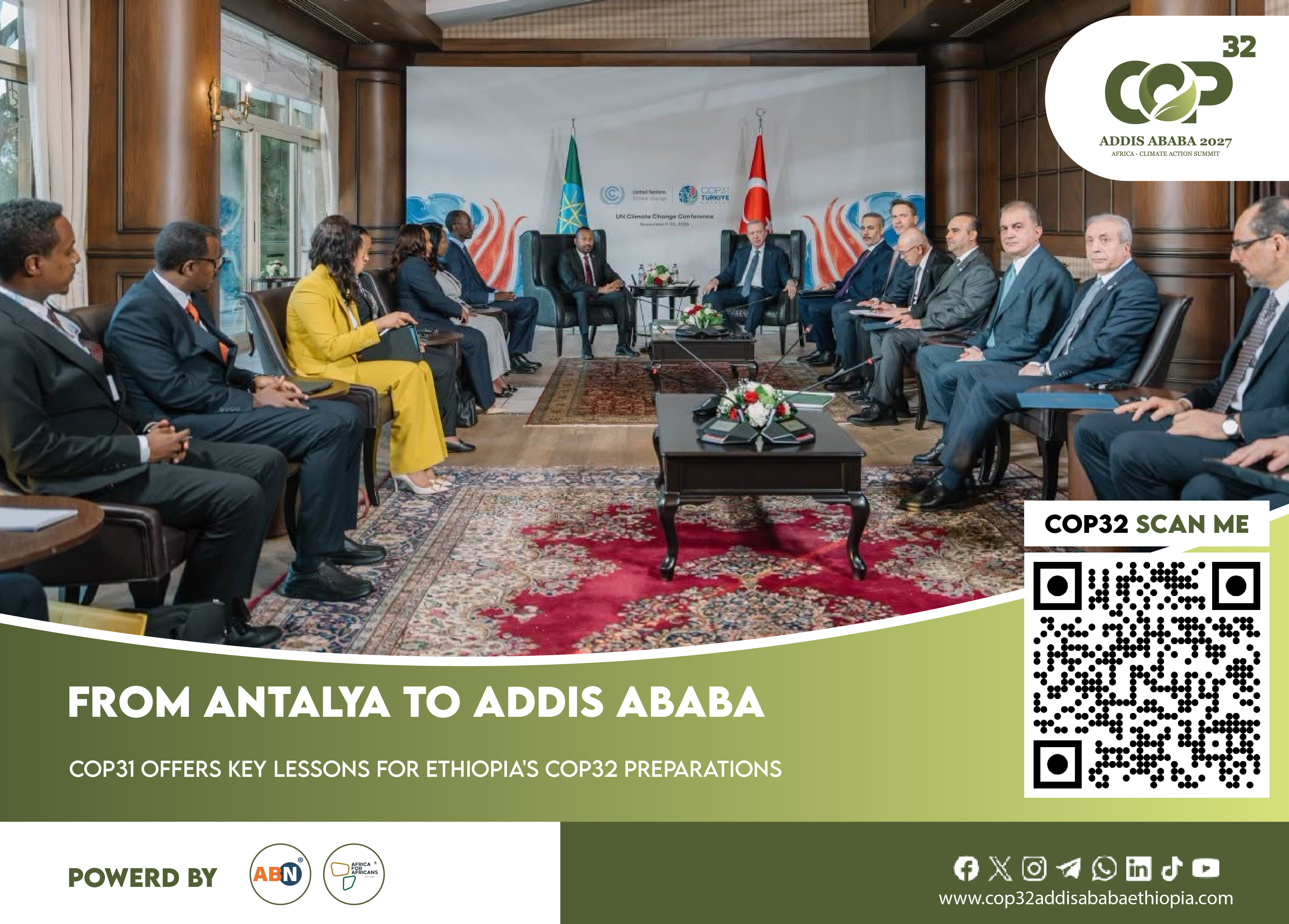
Addis Ababa, Nov 10/2026 ( Cop 32 ) As the 31st United Nations Climate Change Conference (COP31) brings global leaders, policymakers, climate experts and development partners together in Antalya, Ethiopia is using the international gathering as a strategic learning and diplomatic platform ahead of its preparations to host COP32 in Addis Ababa in November 2027. For Ethiopia, COP31 represents more than participation in global climate negotiations. It offers an opportunity to gain practical experience, strengthen international partnerships, showcase national climate initiatives and understand the institutional, logistical and diplomatic demands involved in organizing one of the world's most significant climate conferences. Speaking during Ethiopia's engagement at COP31, Foreign Minister and COP32 President-Designate Gedion Timothewos highlighted the country's commitment to working closely with Türkiye and Australia, supporting constructive negotiations and building a strong foundation for the next climate conference. Ethiopia has also established a dedicated team to advance preparations and benefit from knowledge-sharing with previous COP presidencies. One of the central lessons from Antalya is the importance of effective coordination and clear institutional responsibilities. COP31 is being hosted by Türkiye, while Australia is chairing the formal negotiations under an agreed arrangement. This cooperation demonstrates how international partnerships and well-defined responsibilities can contribute to the organization and management of a complex global conference. For Ethiopia, this experience highlights the importance of coordination among government institutions, international partners, the private sector, civil society and other stakeholders. A successful COP32 will require a unified national preparation framework, clear responsibilities and consistent communication throughout the planning process. Logistics, Infrastructure and International Hospitality Hosting a conference of this scale requires extensive preparation beyond the negotiation halls. Accommodation, transportation, airport services, security, conference facilities, digital connectivity, accessibility and visitor services are essential components of the overall experience. As Addis Ababa prepares to welcome international delegations and participants, COP31 provides an opportunity to observe how these services are coordinated and delivered. Strengthening the city's hospitality capacity, transport systems, conference infrastructure and public services will be important in ensuring that delegates experience an efficient and welcoming environment. Climate Diplomacy and International Partnerships Another important lesson is the value of sustained diplomatic engagement. COP conferences bring together countries with different priorities, development circumstances and climate challenges. Building consensus requires inclusive dialogue, mutual understanding and strong cooperation among participating nations. Ethiopia is already using COP31 to engage international partners and advance its climate priorities. Its national pavilion provides a platform to present the country's green development initiatives, exchange experiences and encourage broader participation in COP32. Discussions with international institutions and climate-focused organizations also offer opportunities to strengthen cooperation in areas such as clean energy, climate finance, technology transfer and investment. Making Climate Finance and Implementation Central Priorities For Ethiopia and many African countries, access to adequate and affordable climate finance remains a major priority. Climate adaptation, renewable energy, sustainable agriculture, resilient infrastructure and environmental protection require substantial investment and international cooperation. COP32 offers Ethiopia an opportunity to place these priorities prominently within the global climate discussion. The country can use its upcoming presidency to encourage stronger partnerships between governments, development institutions, financial organizations and the private sector, while promoting practical approaches that connect climate commitments with implementation. Showcasing Ethiopia's Green Development Vision Ethiopia's participation at COP31 also creates an opportunity to present its environmental and development initiatives to a global audience. The Green Legacy Initiative, renewable energy expansion, forest conservation and broader green economy ambitions demonstrate areas of national experience that can contribute to international knowledge-sharing. For Addis Ababa, preparations for COP32 can also highlight the importance of sustainable urban development, urban greening, improved public spaces, resilient infrastructure and environmental protection. The host city will have an opportunity to demonstrate how climate action can be integrated into urban development and the daily lives of residents. Putting Africa's Priorities at the Centre As the next COP host, Ethiopia carries an important opportunity to amplify Africa's climate priorities, particularly the needs of climate-vulnerable countries and Least Developed Countries. These include adaptation financing, food and water security, energy access, technology transfer, capacity-building and support for communities facing the impacts of climate change. Ethiopia has reaffirmed its commitment to an inclusive, transparent and collaborative COP32 process, with particular attention to consultation and partnership with the Least Developed Countries group. This approach will be important in ensuring that diverse national circumstances and development priorities are reflected in the preparations and discussions leading to the conference. From Experience to Action The experience of COP31 offers Ethiopia a valuable foundation for translating observation and international engagement into practical preparation. Lessons from conference management, diplomatic coordination, stakeholder participation, climate finance and public communication can help strengthen the country's readiness to host COP32. As preparations advance, Addis Ababa 2027 presents an opportunity to bring the international community together around shared climate challenges while giving African priorities a stronger platform in global climate diplomacy. From Antalya to Addis Ababa, the journey toward COP32 is therefore about more than preparing a venue for an international gathering. It is about building partnerships, strengthening institutional capacity and creating the conditions for meaningful climate dialogue and action.
In November 2027, Addis Ababa will have the opportunity to welcome the world and help shape the next chapter of global climate cooperation.